Time
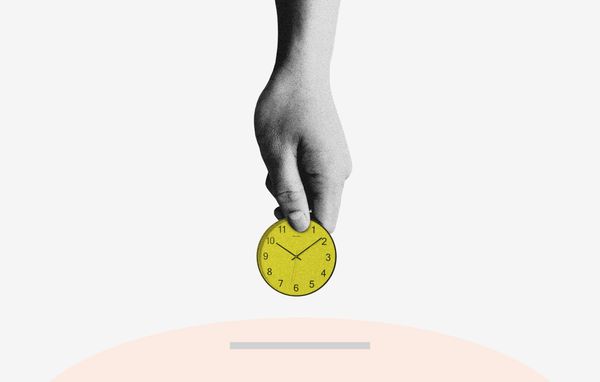
Untether yourself from time

I recently took a few days of vacation, and I immediately made a list of all of the projects and things I wanted to accomplish while I had this free time. As a list maker, I time my daily schedule to the minute in order to finish everything I want done. So, as I made my vacation schedule, I started getting pretty depressed. I was going to be non-stop busy the entire time, which is exactly how I started feeling burnt out in the first place. That made me take a step back and decide that for one day, I wasn’t going to look at my phone or wear a watch all day. I was only going to do what I wanted when I felt like doing it. Let me tell you, it was one of the most relaxing days of my life. In fact, it was so great that I did it for a second and third day, too. No projects gone done, but I felt SO much happier and relaxed. You’re probably thinking, “Duh, Natalie. That’s what vacation is supposed to be.” But it’s difficult for me to operate like that. And I know I’m not alone.
This got me thinking about time and how we can untether ourselves from the clock and tap into, let’s call it our “internal happiness clock.”
So, what exactly is time? It’s obviously a unit of measurement to mark the minutes going by as the Earth spins on its axis, while rotating around the Sun. But what about how we experience it? Why do some days feel longer and others shorter?
The truth is, time is different for all of us in different contexts. Studies show that our automatic timing is controlled by the cerebellum and is responsible for tracking milliseconds. Our cognitively controlled timing is in the prefrontal areas of the brain and tracks minutes. So your brain automatically does things in milliseconds, then in minutes starts to process what’s happening. For example, your body is automatically breathing right now. Then your brain becomes aware that your body is breathing. Those happened on two different scales of time (automatically and cognitively).
Our emotional state can affect how we view time passing as well. If you are happy, time may still move “slow” but if you’re excited and pursuing a goal, it may move “fast.” Time flies when you’re having fun, right? Then there are other emotional + cognitive states like the “flow” state. This is when you’re engaged in a mentally stimulating activity that could go on for hours and you’d have no idea that much time passed because your brain is so wholly engaged in what you’re doing. I get like this when I’m writing or doing crafts.
Then there’s also the way memories are stored in your brain. Some people experience memories in a linear timeline and others as clusters of time. This trickles into how they experience time in the present. If you are a linear time person, you’re likely on time for most things and plan far into the future. If you are a cluster time person, you likely live more in the present, are often late, and don’t plan far into the future. Carl Jung even hypothesized that the way we experience time passing is inherited in our DNA based on how our recent ancestors experienced time.
Ok, woof. That’s a lot. So, how does knowing this make you 1% Better? Believe it or not, it’s actually a total coincidence that I’m publishing this on the same day when the U.S. has its daylight saving time shift. But since that’s the case, why not talk about it? This small shift of one hour is known to cause increased risk of stroke and heart attack. Which got me thinking, that’s crazy that we are so tethered to the clock that a 1-hour shift can be life threatening. How often do you go to bed or wake up at a different time and other than being a little sleepy, you’re fine? So how much of this time shift is in our heads? How much of any time passage is in our heads?
What I’m getting at is that we get to choose how we experience time. Yes, there are deadlines, commitments, and things that just need to get done. But we get to choose how we approach those tasks. Think about doing a plank for one minute. Tough, right? That’s why some geniuses made slightly rounded boards to turn it into a game so that minute passes faster than it would if you were staring at the 60 second countdown. Think about how you can manipulate the way time passes for you. People love podcasts and audiobooks for this reason because they mentally engage us while we’re doing chores, in traffic, etc. For me, it’s been helpful to make a list of 1-3 tasks, then put my phone and watch away and just do them. However long it takes is how long it takes, but I’m not constantly thinking, “This is taking me forever” as I see the minutes tick by.
We are not in control of how fast the Earth is moving, but we are in control of how we personally experience each of those seconds, thanks to our cognitively controlled timing.
This week, how can you enjoy the passage of time 1% more? Can you ignore the clock? Can you find a way to make a boring activity fun? Can you remind yourself that you don’t actually need to get everything done in one day; many tasks can wait and the world won’t end. It is true that we only have this one life, but we can choose how we experience it.
With gratitude,
Natalie
Resources
“7 Things to Know about Daylight Saving Time.” Johns Hopkins Bloomberg School of Public Health, publichealth.jhu.edu/2023/7-things-to-know-about-daylight-saving-time.
By, et al. “Carl Gustav Jung’s Theory of Personality in Psychology.” Simply Psychology, 24 Jan. 2024, www.simplypsychology.org/carl-jung.html.
“How Do Our Bodies Interpret Time?” Headspace, www.headspace.com/articles/bodies-interpret-time.
“The Inner Experience of Time.” National Library of Medicine, 12 July 2009, www.ncbi.nlm.nih.gov/pmc/articles/PMC2685813/.
Sleek, Joe Dawson and Scott. “The Fluidity of Time: Scientists Uncover How Emotions Alter Time Perception.” Association for Psychological Science - APS, 28 Sept. 2018, www.psychologicalscience.org/observer/the-fluidity-of-time.
“Time Perception Mechanisms at Central Nervous System.” National Library of Medicine, 1 Apr. 2016, www.ncbi.nlm.nih.gov/pmc/articles/PMC4830363/.